
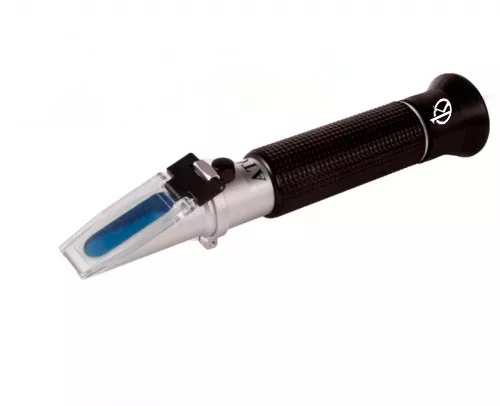
When it comes to precision in the wine industry, using the right refractometer is crucial. Both the ATC Wine Refractometers YR05931 // YR05936 by Kalstein and the Wine Refractometer PAL-35 by Atago offer advanced features for accurate measurement of the sugar levels in wines. However, they have distinct characteristics that might influence your choice depending on specific needs.
The ATC Wine Refractometers YR05931 // YR05936 by Kalstein are designed to offer high precision and convenience. These refractometers provide automatic temperature compensation, ensuring accuracy regardless of temperature variations during measurement. On the other hand, the PAL-35 by Atago is also a well-recognized model featuring a digital readout and compact design but with some differences in specifications.
| Feature | ATC Wine Refractometers YR05931 // YR05936 by Kalstein | Wine Refractometer PAL-35 by Atago |
|---|---|---|
| Automatic Temperature Compensation | Yes | Yes |
| Measurement Range | 0-40% Brix | 0-45% Brix |
| Display | Analog | Digital |
| Calibration | Manual | Automatic |
| Portability | Compact | Ultra-compact |
| Durability | High | Medium |
How They Work
The ATC Wine Refractometers YR05931 // YR05936 by Kalstein use the principle of light refraction through a liquid. When you place a drop of wine on the prism, light bends differently based on the liquid’s sugar concentration. The refractometer’s scale then provides a reading of the Brix level. Moreover, these models feature automatic temperature compensation to correct any temperature-induced error, ensuring accurate measurements in varying environmental conditions.
Similarly, the PAL-35 by Atago operates on the same principle of light refraction, but it offers a digital reading which many users find more comfortable and quick to interpret. Like the Kalstein models, it also includes automatic temperature compensation, providing reliable results.
What They Are Used For
Both the ATC Wine Refractometers YR05931 // YR05936 and the PAL-35 are primarily used to measure the sugar content in wine, known as Brix. This measurement is critical in the wine fermentation process as it indicates the potential alcohol content and helps winemakers understand when the fermentation process should be stopped or adjusted.
Additionally, these tools are invaluable in quality control processes across vineyards and wineries, allowing for the consistent production of high-quality wines by overseeing sugar concentration levels.
Types
Wine refractometers, like those from Kalstein and Atago, can be categorized into analog and digital models. The Kalstein YR05931 // YR05936 models are analog, providing a traditional and reliable method for measuring Brix levels. In contrast, the Atago PAL-35 offers a digital interface, which some users prefer for its ease of reading and potentially quicker usability.
Market Price
In the market, the price of wine refractometers can vary significantly based on features and brand reputation. Typically, the ATC Wine Refractometers YR05931 // YR05936 by Kalstein are priced competitively, providing a cost-effective solution without compromising on quality. The Atago PAL-35, known for its digital display, often comes at a higher price point, reflecting its advanced features and brand name. To get precise pricing and avail exciting offers, you’re encouraged to generate a quote through Kalstein Plus.
Frequently Asked Questions
What is Brix?
Brix is the measurement of the sugar content in an aqueous solution. One degree Brix corresponds to 1 gram of sucrose in 100 grams of solution.
Why is temperature compensation important?
Temperature can affect the refractivity of a liquid. Automatic temperature compensation ensures that readings remain accurate despite temperature changes.
How do I calibrate an analog refractometer?
Analog refractometers typically require manual calibration using distilled water at the standard room temperature of 20°C (68°F). Adjust the calibration screw to ensure accurate readings.
Advantages and Disadvantages
The ATC Wine Refractometers YR05931 // YR05936 by Kalstein have notable advantages, including their reliability, durability, and cost-effectiveness. Their manual calibration might require a bit of user expertise, but it offers precision for those who prefer a hands-on approach. On the flip side, the Atago PAL-35’s digital readout provides ease of use but at a higher cost.
Usage in the Field
In practical scenarios, wine refractometers are indispensable during the wine production process. They help winemakers decide the optimal time to harvest or ferment. With the Kalstein refractometers, users can enjoy robust, shock-resistant design features that make them ideal for rugged vineyard environments, while the Atago PAL-35 might require more careful handling due to its more sensitive build.
Recommendations
To maximize the utility of these refractometers, regular calibration is advised. For the Kalstein models, ensure you check the calibration with distilled water frequently to maintain accuracy. For cleaning, use a soft, damp cloth to remove residues, maintaining the prism’s clarity for consistent readings.
If you are looking for innovation and quality, you’ve come to the right place. At Kalstein we offer you the luxury of exploring our exclusive catalog of laboratory equipment. We manufacture each equipment with a level of excellence. Our intuitive, agile online shopping channels are designed for your comfort, ensuring the most friendly prices. Don’t hesitate anymore, we bring science to life, it’s time to be part of our community. https://kalstein.cn/product/atc-wine-refractometers-yr05931-yr05936/.