
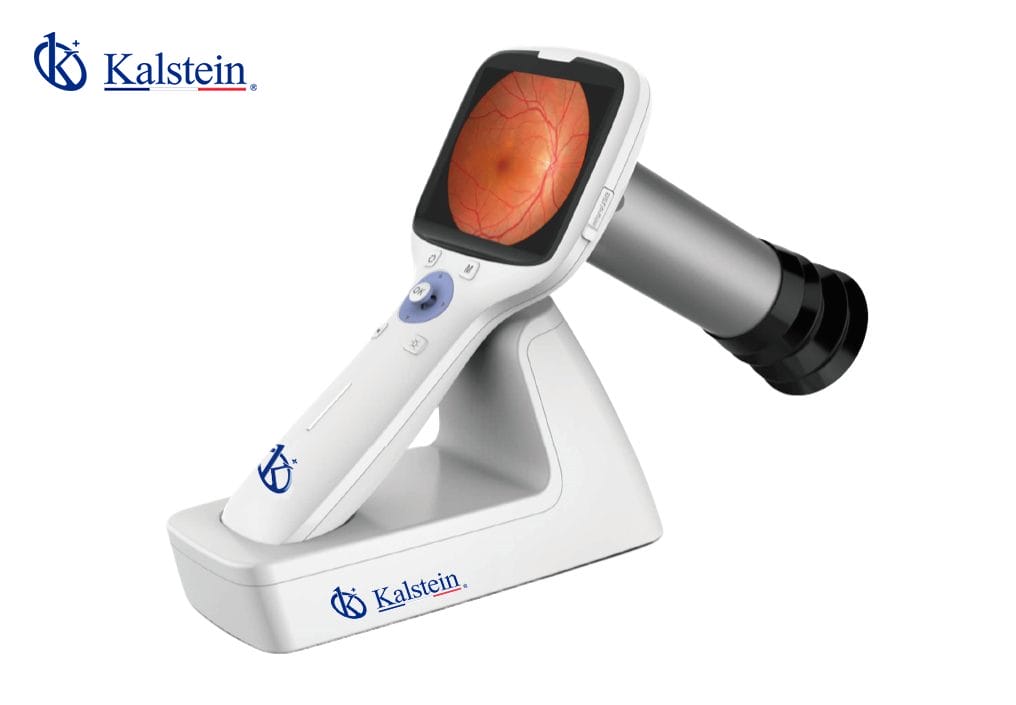
Veterinary Fundus Camera by Kalstein
In the dynamic and ever-evolving field of veterinary medicine, cutting-edge technology plays a crucial role in improving diagnostics and treatment efficiency. Among these advancements is the Veterinary Fundus Camera by Kalstein, designed to provide exceptional imaging of the retina, optic nerve, and other critical components of an animal’s eye. This tool is a pivotal part of any veterinary ophthalmologist’s arsenal, offering unparalleled precision and clarity.
Kalstein’s Veterinary Fundus Camera is celebrated for its reliability and its adeptness at capturing intricate details of the eye. Many veterinarians who have integrated this technology into their practice have noted its impact on their ability to diagnose and subsequently treat various ocular issues more effectively. It’s not just a product; it’s a leap forward into precision veterinary care, enabling practitioners to see what the naked eye cannot.
Features of the Veterinary Fundus Camera
Kalstein has carefully engineered its Veterinary Fundus Cameras with a set of features that cater specifically to the intricate needs of animal eye diagnostics. One of its prime features is the high-resolution imaging capability, which ensures that every detail within the eye is captured with utmost clarity. This feature alone significantly enhances the diagnostic capability of veterinary professionals, allowing for more accurate assessments.
Additionally, these cameras are typically lightweight and portable, making them easy to handle during examinations. Their ergonomic design is not only beneficial for the ease of use but also reduces the likelihood of operator fatigue. The intuitive interface and user-friendly controls also make it an accessible tool, even for those less familiar with sophisticated imaging technologies.
Different Models of Veterinary Fundus Cameras
Kalstein offers a variety of Veterinary Fundus Camera models to suit different needs and budgets within the veterinary sector. Each model is tailored with specific features designed to enhance certain functionalities. From basic models suitable for small clinics to advanced versions for specialized ophthalmic practices, the range is comprehensive.
Some models focus intensely on portability, offering wireless capabilities and battery-operated systems, ideal for veterinarians who may frequently travel or operate in less conventional settings. Others boast higher technological enhancements, like advanced software integration and enhanced image processing, which are crucial for more detailed ophthalmic diagnostics.
Why Does the Veterinary Fundus Camera Have This Pricing?
The pricing of the Veterinary Fundus Camera by Kalstein reflects the sophisticated technology and innovation that goes into its manufacturing. These devices are equipped with cutting-edge imaging technology that requires substantial research and development investment. The high-quality materials and craftsmanship involved in the production also contribute to the cost.
Furthermore, the comprehensive support, software updates, and maintenance options offered post-purchase add value to the overall package, justifying the investment. Veterinarians are also investing in a tool that enhances their practice’s capabilities, allowing for improved diagnostic accuracy and potentially better patient outcomes.
Comparison of Veterinary Fundus Cameras with Similar Products
When comparing Kalstein’s Veterinary Fundus Cameras to similar products on the market, including those from **Welch Allyn** and **Optomed**, several distinctions arise. One of the most significant differences is the balance of cost and technology. While **Welch Allyn** offers robust and reliable options, they tend to be priced higher without necessarily offering a significant advantage in imaging technology.
On the other hand, **Optomed** is known for its compact and portable designs, which Kalstein matches while also offering superior imaging capabilities and interface integration options. The flexibility and adaptability of Kalstein’s models often stand out, offering customized solutions for a diverse range of veterinary practices.
Pros and Cons of the Veterinary Fundus Camera
| Pros | Cons |
|---|---|
| High-resolution imaging for precise diagnostics | Initial cost may be high for smaller clinics |
| Lightweight and portable, ideal for mobile use | Requires some training to use effectively |
| User-friendly interface with intuitive controls | Software updates may require internet access |
| Durable and designed with high-quality materials | Limited models might not fit all budgets |
| Excellent customer support and warranty options | Advanced models can be complex for beginners |
| Enhanced diagnostic capabilities increase treatment efficacy | Maintenance may require professional servicing |
| Offers various models to cater to different budget needs | |
| Improves patient outcomes significantly |
Benefits of Using These Veterinary Fundus Cameras
The Veterinary Fundus Cameras by Kalstein bring a multitude of benefits to the table for practitioners in the field. Primarily, they provide exceptional insight into the internal health of an animal’s eye, thus improving the accuracy of diagnoses. This diagnostic accuracy is crucial as it lays the foundation for effective treatment and patient care.
Moreover, the use of these cameras can significantly reduce diagnostic time, allowing veterinarians to serve more patients efficiently. Their portability also means that they can be used in various settings, from a full-scale clinic to a field environment, providing flexibility in handling diverse cases.
Other Advantages of Veterinary Fundus Cameras
Apart from their primary function in diagnostics, Veterinary Fundus Cameras also contribute to educational purposes. They provide visually rich data that can be used for training budding veterinarians, offering them hands-on experience in diagnosing real-world situations even before they enter actual practice.
Furthermore, the advanced imaging capabilities foster ongoing research in veterinary ophthalmology, enabling studies that can lead to breakthroughs in understanding and treating complex eye conditions in animals. The long-term benefits not only extend to better animal care but also to advancing veterinary science as a whole.
User Feedback on Veterinary Fundus Cameras
Feedback from users of the Kalstein Veterinary Fundus Camera has been overwhelmingly positive. Many practitioners have praised the product for its ease of use and reliability. Veterinarians report that these cameras have transformed their diagnostic processes, allowing them to view and analyze images that were previously inaccessible.
One user noted that the transition from traditional diagnostic methods to using the fundus camera was seamless and led to immediate improvements in diagnostic accuracy. The product support and comprehensive training resources provided by Kalstein have also been highlighted as valuable contributions to their overall satisfaction with the purchase.
Frequently Asked Questions
What is the primary function of a Veterinary Fundus Camera?
The primary function of a Veterinary Fundus Camera is to capture detailed images of an animal’s retina and optic nerve to aid in the diagnosis and treatment of eye conditions.
Is this camera suitable for all animal types?
Yes, these cameras are designed to accommodate the eye structures of a wide range of species, making them versatile tools in veterinary practices.
Can the Veterinary Fundus Camera be used outside of a clinical setting?
Absolutely, the portable design allows for use in various environments, including field settings, enhancing its versatility.
What kind of maintenance does the camera require?
The camera requires regular cleaning and occasional software updates. Kalstein offers comprehensive maintenance packages to keep the device in optimal condition.
Are there training resources available for using the camera?
Yes, Kalstein provides extensive training resources and support to ensure users are comfortable and proficient in using the camera.
How does the camera contribute to improved patient outcomes?
By providing precise diagnostic images, the camera allows for more accurate treatment plans, leading to improved animal health outcomes.
Final Recommendations on Veterinary Fundus Cameras
If you’re considering enhancing your veterinary practice’s diagnostic repertoire, investing in a Veterinary Fundus Camera can be a wise decision. The ability to capture high-resolution images of the eye will not only improve diagnostic accuracy but also facilitate better treatment outcomes. These cameras are a testament to the power of technology in advancing veterinary medicine. For more details and to explore the various models available, you can visit https://kalstein.cn/category-product/veterinary-sector/veterinary-fundus-camera/.